
"Uganda harvest"
600 article(s) found

Introduction to the origin of coffee beans in Uganda
The equator runs across Uganda, and the suitable climate makes it the main producing area of Robbins coffee beans (Robusta) in the world. In the 1960s, Ugandan coffee production remained at 3.5 million bags a year. By the mid-1980s, coffee production had dropped to 250 bags a year, mainly for political reasons. But now coffee production is on the rise again, currently about 3 million bags a year. Coffee
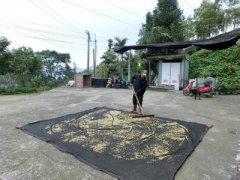
A brief introduction to the treatment method of grinding degree and baking degree of plain and mild Ugandan boutique coffee beans
Uganda is the birthplace of Robusta in Africa, just as Ethiopia is the birthplace of Arabica coffee, which was first found in Uganda. So far, Uganda has a history of growing coffee for more than 100 years. The output ranks second in Africa, after Ethiopia. At the same time, Uganda is one of the few major countries in Africa dedicated to the production of organic coffee. Wu

Introduction of Ugandan Coffee Flavor the taste of Ugandan coffee beans in Uganda's boutique coffee bean producing area
In order to improve the quality and reduce the cost of coffee, Uganda cancelled the exclusive management right of the Coffee Management Committee (Coffee Marketing Board, referred to as CMB) in November 1990. Most of the work originally undertaken by the Coffee Management Committee has now been handed over to the cooperative organization. Privatized coffee accounts for 2% of the country's export revenue, so the government levies coffee shops.

A brief introduction to the flavor, taste and aroma characteristics of Ugandan boutique coffee beans with unique flavor
Uganda is the country of origin of coffee grown in Robusta, but commercial cultivation of Arabica species here did not begin until early 1900. Today, there are still a large number of wild robusta coffee trees in Uganda, which is rare in cities in the world. As a landlocked country, the large coffee cultivation in Uganda is often interplanted, where coffee trees are mixed with food crops and rubber trees.

Historical Origin of Ugandan Coffee, introduction to Ugandan Coffee
Following Ka Pai (Wechat official account vdailycom) found that Uganda is a landlocked country in eastern Africa, across the equator, bordering Kenya to the east, Tanzania and Rwanda to the south, the Democratic Republic of the Congo to the west and Sudan to the north. Most of the territory is located in the Central African Plateau, with lakes, with an average elevation of 1000-1200 meters. There are many lakes and plateaus in the mountains, which are known as the water villages of the plateau.

A brief introduction to the History and Culture of the Origin and Development of Ugandan Fine Coffee beans
Uganda Organic Bugisu producing country: Uganda Grade: HB growing area: Elgon, Mbalai Brand: organic Bugisu treatment method: wet treatment appearance: 1.8dBash 300grgrgrere 16-18SCR Variety: unknown later when steamships replaced sailboats, people drank relatively fresh coffee beans due to shorter shipping time. But people who are used to drinking Chen Dou are not used to it.

A brief introduction to the flavor, taste and aroma characteristics of fresh Ugandan boutique coffee beans
This coffee is produced in the Mount Elgonne region of Uganda. Balanced acidity and rich oil between 1600 and 1900 meters above sea level are the characteristics of this coffee. It tastes mild and simple, with a papaya flavor. Dry aroma (1-5): 3.2 wet aroma (1-5): 3.4 acidity (brightness) (1-10): 8 taste (hierarchy) (1-10): 8.5 taste (alcohol thickness)

Introduction of Ugandan Coffee beans with mild Climate and suitable for growing Coffee
Uganda is a landlocked country in eastern Africa, straddling the equator, bordering Kenya to the east, Tanzania and Rwanda to the south, the Democratic Republic of the Congo to the west and Sudan to the north. Most of the territory is located in the Central African Plateau, with lakes, with an average elevation of 1000,000,000 meters above sea level. There are many lakes and plateaus in the mountains, which are known as the water villages of the plateau. The western branch of the East African Rift Valley runs through the western border, with many rivers and lakes at the bottom of the valley. There is a Victor in Uganda.

A brief introduction to the cultivation of fresh-flavored Ugandan boutique coffee beans, geographical location, climate and altitude
Ugandan coffee is mainly exported to the European Union, of which Germany, Italy and other countries are the largest buyers of coffee. Uganda is the country of origin of coffee grown in Robusta, but commercial cultivation of Arabica species here did not begin until early 1900. Today, there are still a large number of wild robusta coffee trees in Uganda, which is rare in cities in the world. As a landlocked country, Uganda

Introduction to the flavor characteristics of coffee treated by anaerobic fermentation and solarization in the Wenzori Mountains of Uganda
Professional coffee knowledge exchange more coffee bean information please follow Coffee Workshop (Wechat official account cafe_style) Uganda Wenzori Mountains country: Uganda production area: Wenzori Mountains altitude: 1600-1800 m treatment method: anaerobic treatment Sun varieties: SL14SL28 Origin introduction | Uganda is located at the source of the Nile River, which is not dependent on in Africa.

East Africa Coffee Uganda Coffee Beans
In Uganda, Arabica coffee beans account for only 10% of the country's total coffee production, but it is enough to attract attention. Uganda's best coffee is mainly grown in the Elgon and Bugisu mountains along the Kenyan border in the north and in the Ruwensori mountains in the west.

Introduction to the characteristic varieties and Brands of Uganda Fine Coffee Bean Flavor
In 1890, British troops invaded Buganda. Captain Frederick Frederick Lugard, the agent of the Royal British East Africa Company (later Governor of Hong Kong Luigi), forced King Mwaanga of Buganda to sign protection treaties with him twice. In June 1894, the British government signed the New Testament with Buganda, and Buganda officially became a British protectorate. Then, in 1896, Britain extended its protection to Ukraine

A brief introduction to the history and culture of the origin and development of plain and mild Ugandan boutique coffee beans
Uganda is the country of origin of coffee grown in Robusta, but commercial cultivation of Arabica species here did not begin until early 1900. Today, there are still a large number of wild robusta coffee trees in Uganda, which is rare in cities in the world. As a landlocked country, the large coffee cultivation in Uganda is often interplanted, where coffee trees are mixed with food crops and rubber trees.

A brief introduction to the flavor, taste and aroma characteristics of plain and mild Ugandan boutique coffee beans
This coffee is produced in the Mount Elgonne region of Uganda. Balanced acidity and rich oil between 1600 and 1900 meters above sea level are the characteristics of this coffee. It tastes mild and simple, with a papaya flavor. Dry aroma (1-5): 3.2 wet aroma (1-5): 3.4 acidity (brightness) (1-10): 8 taste (hierarchy) (1-10): 8.5 taste (alcohol thickness)

Elgon mountain and Bugisu (Bugisu boutique coffee bean flavor, taste and aroma) in Uganda
The coffee growing industry in Uganda is one of the pillar industries of its exports. Uganda is the birthplace of Robsta in Africa, just as Ethiopia is the origin of Arabica coffee, while Robster coffee was first discovered in Uganda. So far, Uganda has a history of growing coffee for more than 100 years. The output ranks second in Africa, after Ethiopia. At the same time, Uganda is also a minority in Africa.

A brief introduction to the history and culture of the origin and development of fresh-flavored Ugandan boutique coffee beans
Most of Uganda is located in the Central African Plateau, with lakes, with an average elevation of 1000 mi 1200 meters. There are many lakes and plateaus in the mountains, which are known as the water villages of the plateau. The western branch of the East African Rift Valley runs through the western border, with many rivers and lakes at the bottom of the valley. Uganda has a great Victoria lake, coupled with the high mountains, which makes Uganda a mild climate suitable for growing coffee, although it spans both sides of the equator. Right and wrong in Uganda
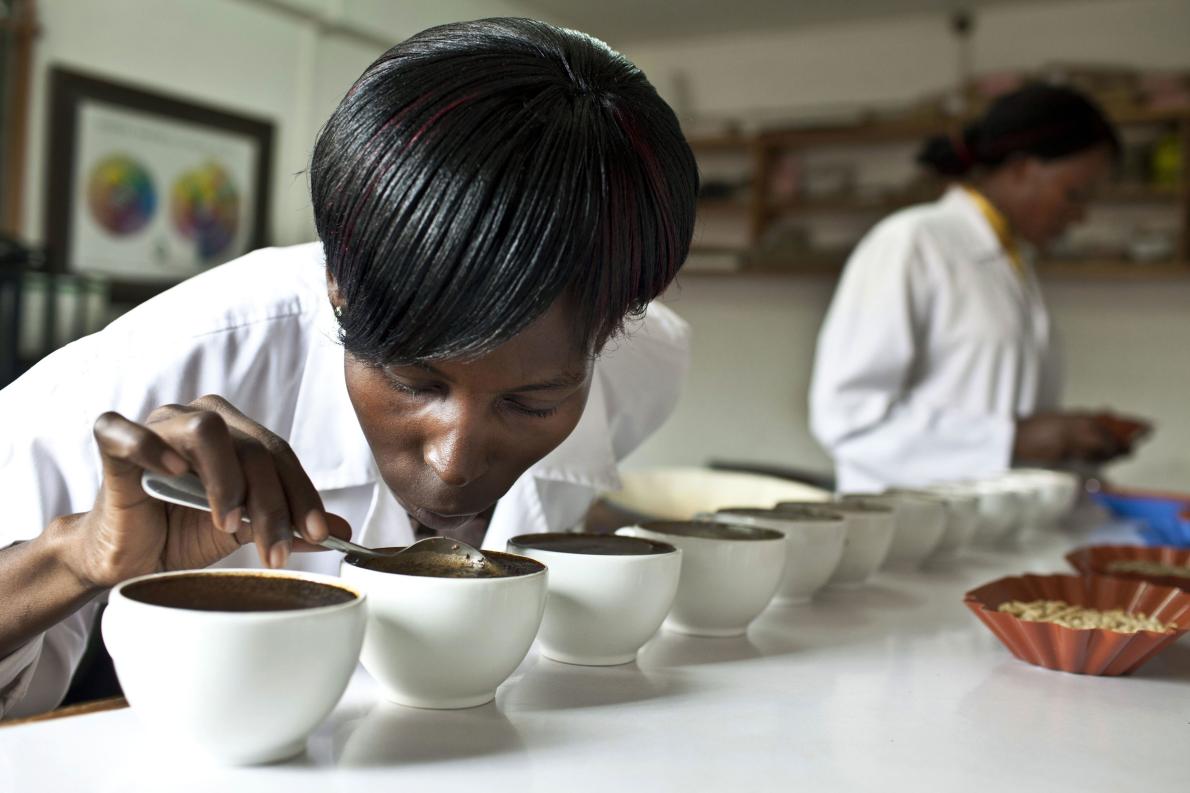
Story of Coffee producing area | how can Ugandan coffee farmers save themselves in the face of many difficulties
For professional baristas, please follow the coffee workshop (Wechat official account cafe_style) Uganda ranks eighth in the world in coffee production, on a par with Peru and second in Africa after Ethiopia. Each year, Uganda usually produces 3 million to 4 million bags of 60 kg coffee, accounting for only 2-3% of global production, far less than Brazil (55 million bags) or Vietnam

A brief introduction to the treatment of grinding degree and baking degree of fresh-flavored Ugandan boutique coffee beans
Strength / main attribute: medium strength / high oil content, simple and mild recommended roasting degree: full city or full city+ comparison: a unique African coffee, very similar to Indonesian coffee, Ugandan coffee is mainly exported to the European Union, of which Germany, Italy and other countries are the largest buyers of coffee. Country of production: Uganda Grade: HB planting area: Elgon region

Price list of Ugandan Coffee beans what are the flavor characteristics of Uganda Mangdie Coffee
Professional coffee knowledge exchange more coffee bean information please follow the coffee workshop (Wechat official account cafe_style) Uganda is located in the Nile, the source of the Nile is not by the sea in Africa, although the same as other East African countries have a long history of producing coffee, but due to the war caused by ethnic antagonism, coffee quality has never been improved, good coffee is mostly grown in areas adjacent to Kenya

Does the coffee industry account for 1/3 of the three major industries in Uganda?
In order to improve the quality and reduce the cost of coffee, Uganda cancelled the exclusive management right of the Coffee Management Committee (Coffee Marketing Board, referred to as CMB) in November 1990. Most of the work originally undertaken by the Coffee Management Committee has now been handed over to the cooperative organization. Privatized coffee accounts for 2% of the country's export revenue, so the government levies coffee shops.